Parth's Early Build Journey

The childhood journey behind the builder.

From football and YouTube to robotics, Arduino, drones, and working hardware projects — this is the period where curiosity became a habit of building.

Laptop / Code
Motor / Electronics
Arduino Board
Drone
Robotics / Lego

Where the Journey Started

Football stopped. Curiosity did not.

Football was one of Parth's early interests, but a knee problem stopped him from continuing the way he wanted. As friends kept playing and going for tournaments, he spent more time away from the playground. That created space for something else to grow.

YouTube became more than entertainment. Watching videos about gadgets, robotics, and electronics sparked a different kind of curiosity — how things work, how they are controlled, and whether he could build something himself.

One video about sharpening a pencil with a motor sparked an early interest in practical electronics. When finding materials was not always easy, the next step became clear: learn the basics properly and start building from there.

First Structured Exposure

Robotics turned interest into structured building.

Parth joined robotics classes in Pune and completed all three levels of LEGO Advanced Robotics. That stage gave him a structured foundation in electronics basics, C++ coding, assembling, movement logic, control, and troubleshooting.

More importantly, it changed the way he approached learning. Instead of only being curious about gadgets, he started learning how systems are put together, how components interact, and how to test an idea step by step.

This phase also gave him the confidence to move beyond guided classwork and start learning independently at home.

Code + Components + Real-world Systems

ArduinoC++ElectronicsIoTDronesPythonRaspberry PiSensorsAutomationRFID SystemsHome AutomationBluetooth Control

Early Output

He did not stop at one or two projects.

Between roughly the ages of 12 and 14, Parth built or documented nearly 35 early projects across robotics, drones, Arduino, IoT, Bluetooth, GSM, Alexa, sensors, lighting, home automation, Python, and simple web experiments. A few smaller experiments were left out, so the actual number was slightly higher.

Some projects were guided, some were learning exercises, and many later ones were self-driven home builds. What matters is the pattern: he kept building, testing, documenting, and moving from one idea to the next over a relatively short period.

This consistency matters more than any one individual project. It shows sustained curiosity, working discipline, and a genuine habit of turning ideas into prototypes.
  • Started around age 12
  • Nearly 35 documented early projects
  • Built across 2016–2018
  • Hardware + coding + documentation

Problem-Solving Method

Build. Test. Debug. Improve. Repeat.

When stuck, the process was simple: observe the issue, test one part at a time, search for possible fixes, adjust the build or code, and try again.

Learning loop

  1. Define the requirement
  2. Identify the missing concept
  3. Learn from docs, forums, videos, and examples
  4. Set up the structure
  5. Write code / assemble the system
  6. Test through trial and error
  7. Debug the issue
  8. Improve the system
  9. Document or record the demo

Parth's strength is not that he always knew everything in advance. It is that he kept learning by building, debugging, retrying, and figuring things out.

Documenting the Work

He was not only building. He was also learning how to present the work.

Many of the early projects were not only built and tested — they were also recorded, explained, edited, and published by Parth himself. Across several videos, he handled video shooting, basic scripting, on-screen text, editing, music selection, and simple visual effects using tools like Filmora.

That matters because it shows a second skill developing in parallel: the ability to explain technical work clearly. He was not just assembling electronics at home; he was also learning how to communicate what the project does, how it works, and why it matters.

This documentation habit helped turn small experiments into visible proof of learning.

  • Video shooting
  • On-screen text and explanation
  • Editing in Filmora
  • Music and presentation choices
  • Publishing project demos online

Early Public Visibility

Some of the work began getting noticed publicly.

As the project archive grew, some of Parth's early work also began receiving outside visibility. This was not the goal at the time, but it became a useful sign that his experiments were being seen beyond home and class environments.

Nelkinda Tech Kids Meetup 2018

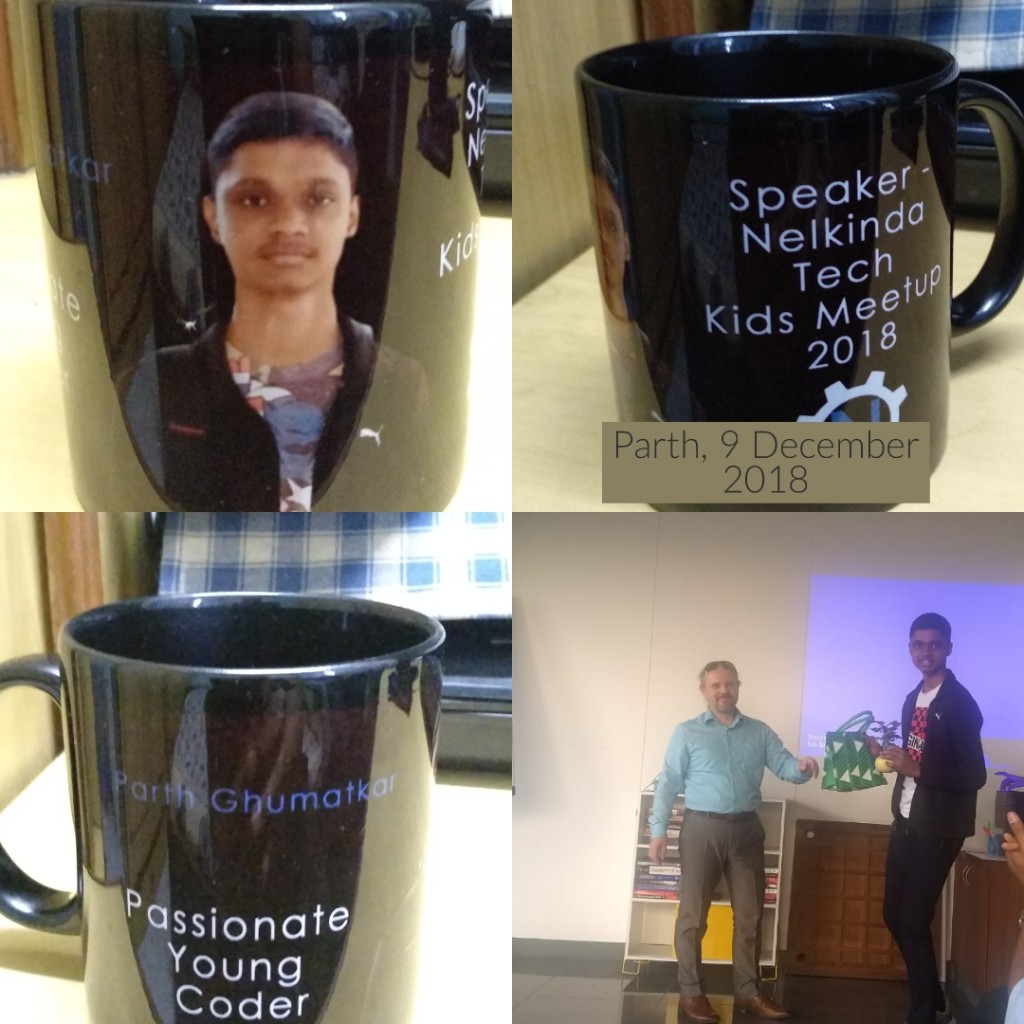
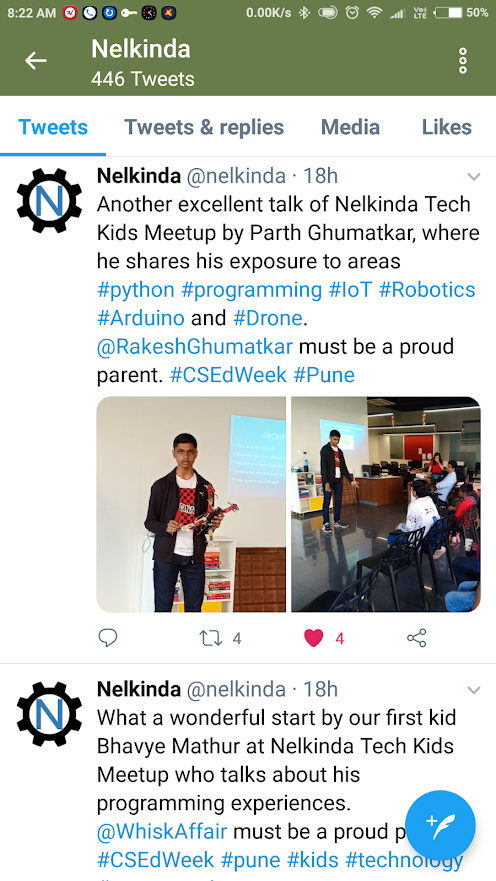
On 9 December 2018, Parth presented "An Accidental Coder at the Age of 11" at Nelkinda Tech Kids Meetup. The talk covered Python, programming, IoT, robotics, Arduino, drones, electronics, and early automation work.

An Accidental Coder at the Age of 11

Passionate Young Coder

Speaker recognition — Nelkinda Tech Kids Meetup, 9 Dec 2018
Nelkinda public mention

Global Day of Coderetreat 2018

At Global Day of Coderetreat 2018, Parth participated with experienced software professionals and was unanimously selected for felicitation for his logic, coding approach, and problem-solving ability.

Recognition at Global Day of Coderetreat 2018

Early Journey Timeline

The path in nine short steps.

  1. Football interest

  2. Time away from the playground

  3. YouTube discovery

  4. Interest in motors and electronics

  5. Robotics classes in Pune

  6. LEGO robotics foundation

  7. Independent home learning

  8. Drone learning and hardware experimentation

  9. Arduino, IoT, automation, and public project documentation

Builder habit forms: from curiosity to repeated hands-on projects.

From Early Builds to Current Systems

From early builds to current systems.

The pattern that started early stayed the same: curiosity, testing, debugging, persistence, and learning by doing. Current projects now apply that same approach to software systems, automation, data, AI, and business workflows.